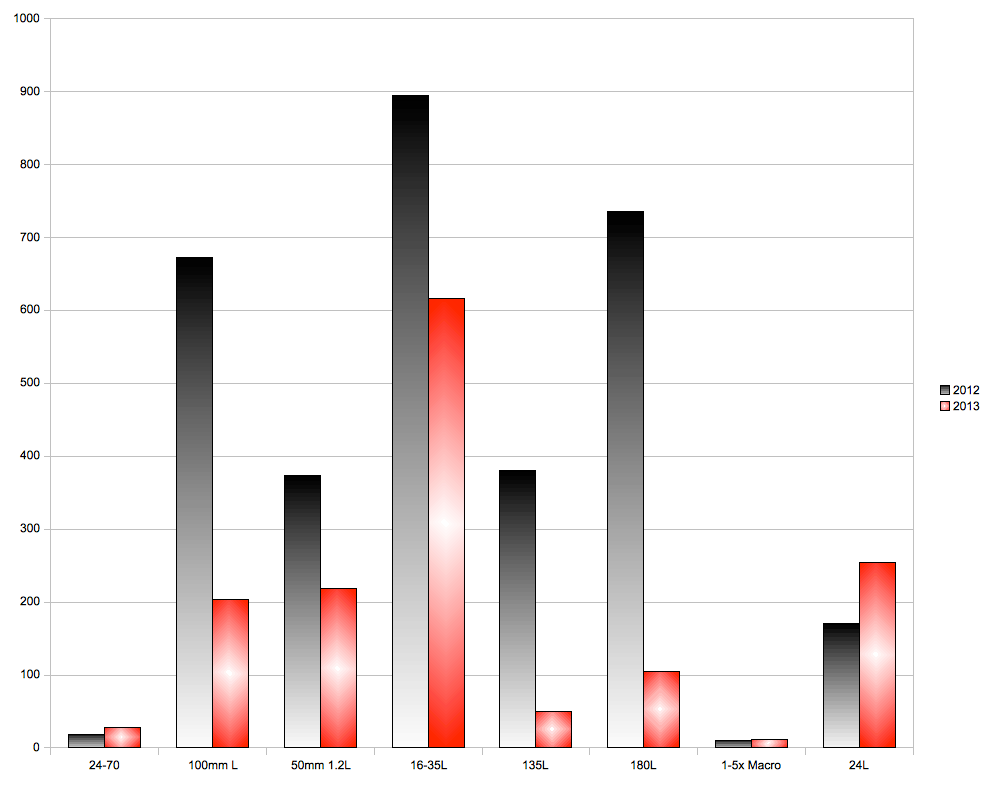
It has been a while since I posted an analysis of my lens usage. (Frankly it's been a while since I posted at all!). I did a quick analysis of my lens usage over the past two years to compare to the previous ones I have posted, here, here and here.
The most obvious thing is that I took a lot less photos in 2013, even with Ireland. The sad part is that trip probably was nearly half my photos for the year. Let's hope I can do better this year. I am so far, and we have another vacation planned in the near future so that should help!
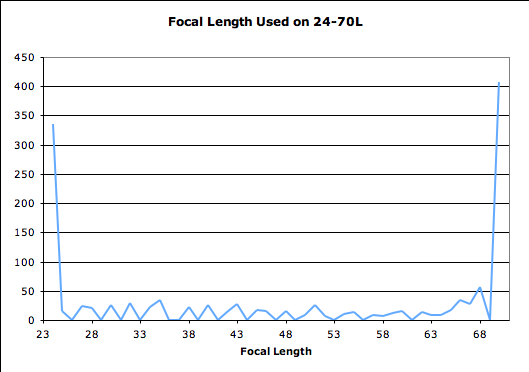
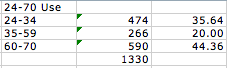
My 16-35L is still definitely a favorite lens. Graphs like this make me think about selling the 24-70L. I really don't use it a lot, but I feel like it's a good lens to have in the lineup.
Showing posts with label equipment. Show all posts
3.09.2014
Lens Use 2012 and 2013
2.20.2012
2011 Lens Usage
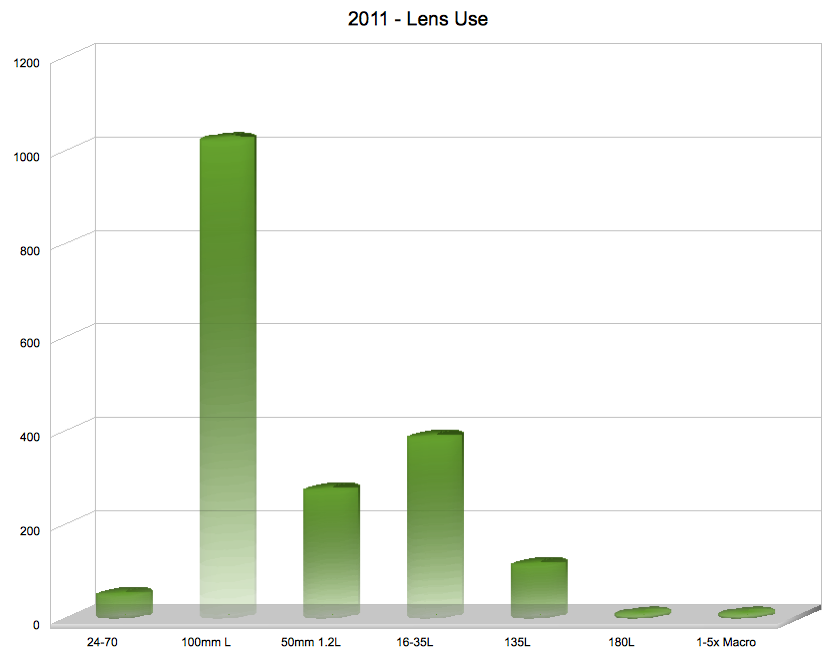
This is a little later than I normally post this but I still wanted to go back and take a look at how much use each of my lenses got in 2011, especially compared to 2010. A big difference I found when pulling this together is that I took a lot less photos in 2011 (I knew this was going to be the case though). My LR catalog had ~1850 images in it for 2011, compared to over 5000 for 2010. Part of that is probably due to not having a big vacation in 2011, but more so from working too much.

The 100L won out again. And the 16-35 over took the 24-70 by far, which I think will be true again this year as the 16-35 is what I am choosing to take on vacations now instead. Hopefully 2012 will see a lot more shooting for me!

The 100L won out again. And the 16-35 over took the 24-70 by far, which I think will be true again this year as the 16-35 is what I am choosing to take on vacations now instead. Hopefully 2012 will see a lot more shooting for me!
1.11.2011
2010 Lens Usage
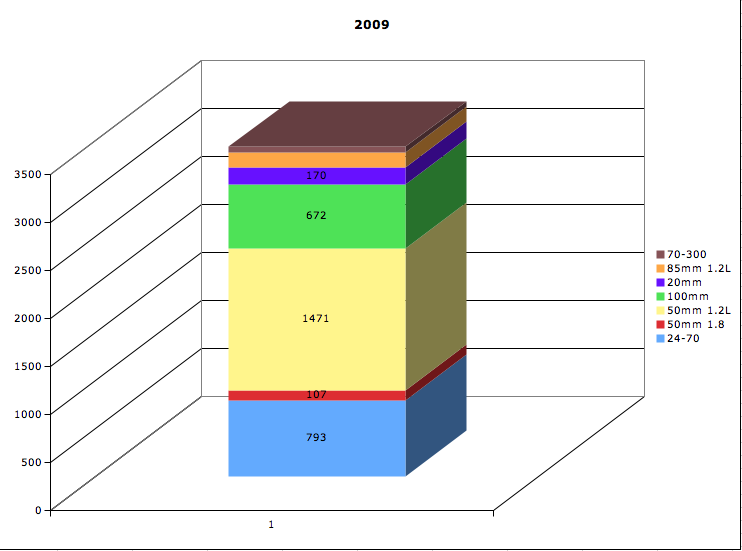
Back in early 2009 I posted some charts breaking down how often I use my different lenses. That same question came up recently on one of my message boards and I realized I hadn't revisited that data analysis recently. In fact I skipped analyzing 2009 altogether so let's start with that data:

Not too surprising the 24-70, 50L and 100mm macro made up the bulk of my shooting. The 70-300 was used less than the 85L which I only rented for less than a week. I am a little surprised at how much I used the 50 actually.
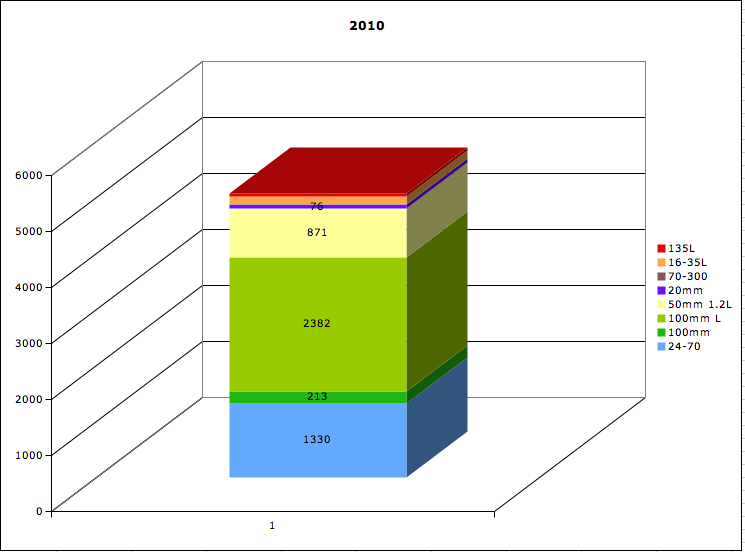
Moving on to 2010

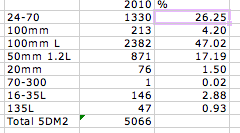
Again similar lenses, the 100mm macro has been replaced by the L version. My new lenses got a little play in at the end of the year. Egypt made up the bulk of the 24-70 shots and you can clearly see my focus on macro photography this year with the usage of the 100L.
I had guessed on the message board I used the 24-70, 100L and 50L for 90% of my shooting, but that it was pretty even between them. I was close, but wrong about the spread

That definitely justifies for me selling off my 70-300 IS.
I thought it would be fun to look at the focal length I used with the 24-70 to see how I actually used that lens. I thought I generally would be at one extreme or the other.

And I was right. 80% of my shooting was within 10mm of either end of the wide or long end of the lens.

Have you ever done a similar metadata analysis in LR?

Not too surprising the 24-70, 50L and 100mm macro made up the bulk of my shooting. The 70-300 was used less than the 85L which I only rented for less than a week. I am a little surprised at how much I used the 50 actually.
Moving on to 2010

Again similar lenses, the 100mm macro has been replaced by the L version. My new lenses got a little play in at the end of the year. Egypt made up the bulk of the 24-70 shots and you can clearly see my focus on macro photography this year with the usage of the 100L.
I had guessed on the message board I used the 24-70, 100L and 50L for 90% of my shooting, but that it was pretty even between them. I was close, but wrong about the spread

That definitely justifies for me selling off my 70-300 IS.
I thought it would be fun to look at the focal length I used with the 24-70 to see how I actually used that lens. I thought I generally would be at one extreme or the other.

And I was right. 80% of my shooting was within 10mm of either end of the wide or long end of the lens.

Have you ever done a similar metadata analysis in LR?
5.18.2009
Photography Tips 5: DOF Beyond Aperture and a little Bokeh
DOF Beyond Aperture and a little Bokeh
Hopefully if you have read some of the articles I suggested in my first post you know by now what a shallow or deep depth of field is and that your aperture opening has a big impact on this. What you might not know yet is this isn't the only thing that impacts your DOF, nor is it the only way to get good bokeh. There are several other factors to consider and play with, mainly your focal length, focusing distance and for bokeh especially the distance between your subject and it's background. I thought it would be fun to go over each of those one at a time with example images. Another good way to understand the magintude of these changes if it interests you is to play with an online DOF calculator. This is a good one. You can enter in various combinations to see what the results might be before you go shoot and after. I have added the calculated information from below each image. All images shot with 5D Mark II.
Aperture:
Let's start with a review of aperture and how that impacts your DOF. The aperture (recorded as something like f/1.2, f/2.8, f/8, etc) designates how open the aperture of your lens is. The larger the number the smaller the opening (because it is a fraction) letting in less light, the smaller the number the larger the opening the more light allowed in. Now a larger number also means a deeper depth of field, and a smaller number means a shallower DOF. The easiest way to show this is with my 50mm 1.2 lens. So here is a shot at f/1.2 and one at f/8. Obviously I had to change other settings in these images to get the same exposure for each so there are other differences as well.

50mm, f/1.2, ISO 50, ss 1/500, focusing distance 1.5 ft
DOF Near Limit:1.49 ft, Far Limit:1.51 ft, Total:0.02ft

50mm, f/10, ISO 800, ss 1/125, focusing distance 1.5 ft
DOF Near Limit:1.43 ft, Far Limit:1.58 ft, Total:0.15ft
Focal Length
Aperture was pretty easy, focal length is a little bit different. I am not going to try to explain why (frankly I am not sure I know enough techincally about it to be able to anyway) but basically at the same aperture your DOF will be deeper with a wide angle lens versus a telephoto lens.
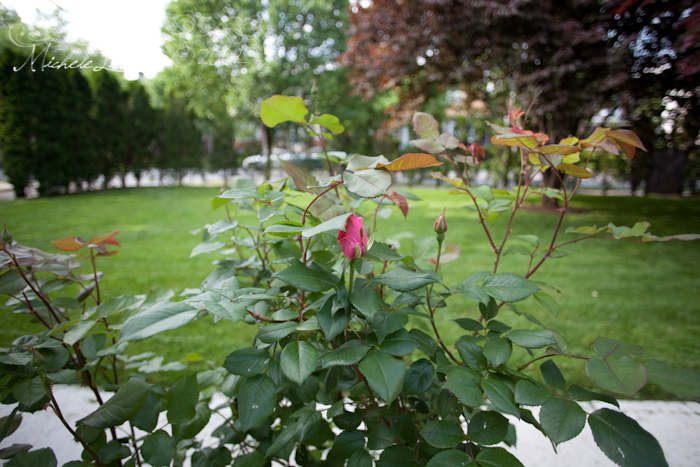
20mm, f/3.5, ISO 100, ss 1/125, focusing distance 1.5 ft
DOF Near Limit:1.35 ft, Far Limit:1.69 ft, Total:0.33ft (for some reason the online calculator I am using has f/3.4 and f/3.6 but not f/3.5, so I used f/3.4 for these calculations)

100mm, f/3.5, ISO 100, ss 1/125, focusing distance 1.5 ft
DOF Near Limit:1.49 ft, Far Limit:1.51 ft, Total:0.02ft

Standing in the same place as with the 20mm with 100mm, also obviously changes the composition, so I also backed up and took an image with the same amount of the rose bush in the frame
100mm, f/3.5, ISO 100, ss 1/125, focusing distance 5 ft
DOF Near Limit:4.93 ft, Far Limit:5.07 ft, Total:0.14ft
Focusing Distance:
This plays a big part in macro photography and is well worth understanding if that is a type of photography you are interested in. The closer the point you are focusing on to your sensor the narrower your DOF will be. Two shots with my 100mm f/2.8 macro both at f/4.5.
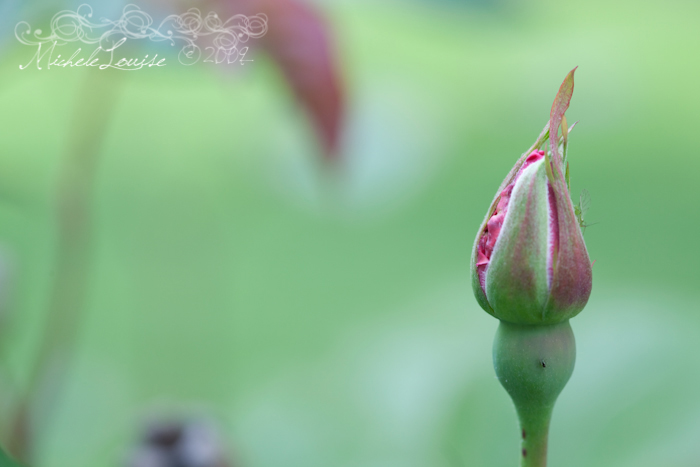
100mm, f/4.5, ISO 320, ss 1/100, focusing distance 1.3 ft
DOF Near Limit:1.29 ft, Far Limit:1.31 ft, Total:0.01ft

100mm, f/4.5, ISO 320, ss 1/100, focusing distance 2 ft
DOF Near Limit:1.99 ft, Far Limit:2.01 ft, Total:0.03ft (that doesn't sound like a big increase, but it tripled and in macro work that actually is a long distance.)
A great exercise to complete especially for macro work to help you get a handle on this one is to put your camera in aperture priority mode, start at your minimum focusing distance and go up through the aperture settings (f/2.8, f/4.5, f/5.6 etc) then back up and repeat. Ideally you would do this with your camera on a tripod so that slower shutter speeds at narrower apertures do not negatively impact your images.
Distance between subject and background:
Now this doesn't actually change your DOF at all, but it does change sort of the apparent DOF, and definitely impacts the bokeh you get in your image. If you have played around at all with the DOF calculator you will see that your DOF falls off as you travel away from the focus point, therefore the more distance between your subject and the background the less likely the background will fall in the in focus area. Examples here are again 100mm macro lens,

100mm, f/4.5, ISO 320, ss 1/100, focusing distance 1.5 ft
DOF Near Limit:1.49 ft, Far Limit:1.51 ft, Total:0.01ft

Here I just moved around the bush to a spot with more leaves right behind my subject flower.
100mm, f/4.5, ISO 320, ss 1/100, focusing distance 1.5 ft
DOF Near Limit:1.49 ft, Far Limit:1.51 ft, Total:0.01ft
Hopefully if you have read some of the articles I suggested in my first post you know by now what a shallow or deep depth of field is and that your aperture opening has a big impact on this. What you might not know yet is this isn't the only thing that impacts your DOF, nor is it the only way to get good bokeh. There are several other factors to consider and play with, mainly your focal length, focusing distance and for bokeh especially the distance between your subject and it's background. I thought it would be fun to go over each of those one at a time with example images. Another good way to understand the magintude of these changes if it interests you is to play with an online DOF calculator. This is a good one. You can enter in various combinations to see what the results might be before you go shoot and after. I have added the calculated information from below each image. All images shot with 5D Mark II.
Aperture:
Let's start with a review of aperture and how that impacts your DOF. The aperture (recorded as something like f/1.2, f/2.8, f/8, etc) designates how open the aperture of your lens is. The larger the number the smaller the opening (because it is a fraction) letting in less light, the smaller the number the larger the opening the more light allowed in. Now a larger number also means a deeper depth of field, and a smaller number means a shallower DOF. The easiest way to show this is with my 50mm 1.2 lens. So here is a shot at f/1.2 and one at f/8. Obviously I had to change other settings in these images to get the same exposure for each so there are other differences as well.

50mm, f/1.2, ISO 50, ss 1/500, focusing distance 1.5 ft
DOF Near Limit:1.49 ft, Far Limit:1.51 ft, Total:0.02ft

50mm, f/10, ISO 800, ss 1/125, focusing distance 1.5 ft
DOF Near Limit:1.43 ft, Far Limit:1.58 ft, Total:0.15ft
Focal Length
Aperture was pretty easy, focal length is a little bit different. I am not going to try to explain why (frankly I am not sure I know enough techincally about it to be able to anyway) but basically at the same aperture your DOF will be deeper with a wide angle lens versus a telephoto lens.

20mm, f/3.5, ISO 100, ss 1/125, focusing distance 1.5 ft
DOF Near Limit:1.35 ft, Far Limit:1.69 ft, Total:0.33ft (for some reason the online calculator I am using has f/3.4 and f/3.6 but not f/3.5, so I used f/3.4 for these calculations)

100mm, f/3.5, ISO 100, ss 1/125, focusing distance 1.5 ft
DOF Near Limit:1.49 ft, Far Limit:1.51 ft, Total:0.02ft

Standing in the same place as with the 20mm with 100mm, also obviously changes the composition, so I also backed up and took an image with the same amount of the rose bush in the frame
100mm, f/3.5, ISO 100, ss 1/125, focusing distance 5 ft
DOF Near Limit:4.93 ft, Far Limit:5.07 ft, Total:0.14ft
Focusing Distance:
This plays a big part in macro photography and is well worth understanding if that is a type of photography you are interested in. The closer the point you are focusing on to your sensor the narrower your DOF will be. Two shots with my 100mm f/2.8 macro both at f/4.5.

100mm, f/4.5, ISO 320, ss 1/100, focusing distance 1.3 ft
DOF Near Limit:1.29 ft, Far Limit:1.31 ft, Total:0.01ft

100mm, f/4.5, ISO 320, ss 1/100, focusing distance 2 ft
DOF Near Limit:1.99 ft, Far Limit:2.01 ft, Total:0.03ft (that doesn't sound like a big increase, but it tripled and in macro work that actually is a long distance.)
A great exercise to complete especially for macro work to help you get a handle on this one is to put your camera in aperture priority mode, start at your minimum focusing distance and go up through the aperture settings (f/2.8, f/4.5, f/5.6 etc) then back up and repeat. Ideally you would do this with your camera on a tripod so that slower shutter speeds at narrower apertures do not negatively impact your images.
Distance between subject and background:
Now this doesn't actually change your DOF at all, but it does change sort of the apparent DOF, and definitely impacts the bokeh you get in your image. If you have played around at all with the DOF calculator you will see that your DOF falls off as you travel away from the focus point, therefore the more distance between your subject and the background the less likely the background will fall in the in focus area. Examples here are again 100mm macro lens,

100mm, f/4.5, ISO 320, ss 1/100, focusing distance 1.5 ft
DOF Near Limit:1.49 ft, Far Limit:1.51 ft, Total:0.01ft

Here I just moved around the bush to a spot with more leaves right behind my subject flower.
100mm, f/4.5, ISO 320, ss 1/100, focusing distance 1.5 ft
DOF Near Limit:1.49 ft, Far Limit:1.51 ft, Total:0.01ft
Labels:
100mm macro,
20mm,
50mm1.2L,
5dmarkii,
equipment,
photography,
tips
4.28.2009
Photography Tips 4: My Equipment
Canon Digital Rebel XT with 18-55mm kit lens
My first real photography purchase was my original digital SLR. The current version of the Canon Rebel is the XSi or the soon to be released T1i. This was a great camera to start with, it allowed me to learn how to shoot in manual and control my shutter speed, aperture, ISO, focus, exposure, it let me learn to shoot in RAW and to start building up my collection of Canon lenses. You can see images shot with this camera in my flickr stream. I am a firm believer that it is the photographer not the camera that makes good pictures, but better equipment does give you more options.
Canon 70-300mm IS
One of the first places I took my camera was a horse show at a local park in CA, while I was there I realized that I needed a lens with more reach. I picked this lens because it had the longest reach in a zoom lens, was under $1000 (this was before I started to buy L lenses, and I knew that it likely wouldn't get a lot of use), and had IS built in which I knew would come in handy at 300mm. You can check out some shots I have taken with it in my flickr stream. The IS saves me at least two stops in my ability to handhold this lens. When I used it at 300mm on my XT I should have had a shutter speed of at least 1/500, but I could easily get away with a shutter speed of 1/160 and get a sharp image. I really should do some experiments with the IS on and off on my 5D and see how much it really saves me.
Canon 20mm f/2.8
The first big vacation we took after I had my XT was our 1 year anniversary/honeymoon trip to Hawaii. While my 18-55 lens went pretty wide, I wanted a sharper wide angle lens, so I bought my first prime lens (boy did that confuse Mike while we were in Kauai "how do you zoom with this?" "use your feet"). I didn't realize how much better the image quality would be from this lens compared to my kit, it kind of blew my mind. You can see several shots from Kauai taken with this lens on flickr. This lens sort of got pushed to the back of the pile later as the next lens I bought was much better for indoors, and I discovered generally I like zooms more than primes. However since I upgraded to a full-frame camera this lens is getting a lot more use. It gives just enough distoration to make things interesting, especially for architectural photos.
Canon 50mm 1.8 II
Somewhere in the dark hours of my first winter trying to shoot with an SLR indoors without flash I realized that my kit lens wasn't going to cut it in terms of letting light into my camera. I did some reading and the 50mm f/1.8 came up all over the place as a great affordable option. I ordered this lens right before we left for Kauai, thinking it would come in handy at the luau we went to. Would have been better if I had really known what I was doing with it, but I got some lucky shots.

If you want to see some more shots taken with this lens you can check out the ones I have up on flickr. My copy of this lens did seem to have a bit of a focus issue, I think it front focused a bit but I have heard that is pretty easy to get fixed if you send it in to Canon.
Canon Speedlite 430EX
Also during the dark winter I realized that I needed a flash that I could have more control over in terms of power, direction etc so I bought a speedlite. Honestly it took quite a while before I was really making much use of my flash. I think how I use this deserves its own post, it's a bit more complicated than the lenses.
Canon 100mm macro
One of the subjects I have always wanted to photograph was flowers, I have never really been a portrait person but macro photography just calls to me. I knew that my other lenses wouldn't let me get the kind of shots that I wanted so I started to look into different macro lenses. Canon actually makes quite a few.
EF 50mm f/2.5 - doesn't do 1:1 without an adapter
EF-S 60mm f/2.8 - wouldn't work on a full frame camera
EF 100mm f/2.8 - great reviews, good price, lightweight
EF 180mm f/3.5L - more expensive, heaevier would really need a tripod.
MP-E 65mm f/2.8 1-5x - I didn't really look into this one at the time, but I am thinking more about it now.
I choose the 100mm because it got great reviews overall, especially for the price, and I wasn't ready to shell out for a tripod (though it is next on my list now). I have been really pleased with this purchase. It is a sharp lens, great for macro work and it also makes a good portrait lens, especially for newborns. You can see a mixture of shots from it on flickr.
Canon 24-70 f/2.8L
I finally started to realize that this hobby wasn't going to go away, and I hated the results I could get from my kit lens compared to my prime lenses, but I also felt trapped by not being able to zoom. After a LOT of research and saving I settled on the 24-70L as my replacement. I think this lens was one of the best purchases I have made, it is sharp, has amazing color, great bokeh, fast autofocus, I just adore it. Honestly I saw a huge improvement in my photography once I attached this lens to my camera, you can see a lot of shots with it here. When I did my little study on what lenses I use the most, this one blew all the others out of the water. If my apartment was burning down and I could only grab one lens, this would be it.
Canon 5D Mark II
While my XT served me really well for a while, eventually I started to run into some roadblocks with it. Lots of noise even at ISO 800, inability to go above ISO 1600, crop factor, I even made a list in February of 2008 of all the things I was looking for in a camera body upgrade. While the 5D Mark II doesn't meet all of them, it comes very close. I feel like this camera has allowed my photography to grow in ways that I never could have with the XT. There have been so many situations that this camera has allowed me to capture that I could not have before. I adore it. Again you can check out about a million shots with it on flickr.
Canon 50mm f/1.2L
Having tasted the beauty that is an L lens, I just had to get some more of them. I knew that my 50 1.8 was a lens that I used a lot, but I had some frustrations with it, it wasn't as sharp as my 24-70L, the colors were not as saturated and it hunted for focus a lot in low light. Instead of buying new lenses, since I felt pretty happy with my lens selection I thought I would upgrade one instead. I had a bit of an issue with the first refurbished copy I ordered from adorama being really really soft, but the second copy I got is much better. Though not perfect. It does focus a lot more easily, and the colors are great. I haven't shot a lot with it yet, but you can see some here.
PS Writing up these posts takes far longer than regular blog posts, I am spent!
My first real photography purchase was my original digital SLR. The current version of the Canon Rebel is the XSi or the soon to be released T1i. This was a great camera to start with, it allowed me to learn how to shoot in manual and control my shutter speed, aperture, ISO, focus, exposure, it let me learn to shoot in RAW and to start building up my collection of Canon lenses. You can see images shot with this camera in my flickr stream. I am a firm believer that it is the photographer not the camera that makes good pictures, but better equipment does give you more options.
Canon 70-300mm IS
One of the first places I took my camera was a horse show at a local park in CA, while I was there I realized that I needed a lens with more reach. I picked this lens because it had the longest reach in a zoom lens, was under $1000 (this was before I started to buy L lenses, and I knew that it likely wouldn't get a lot of use), and had IS built in which I knew would come in handy at 300mm. You can check out some shots I have taken with it in my flickr stream. The IS saves me at least two stops in my ability to handhold this lens. When I used it at 300mm on my XT I should have had a shutter speed of at least 1/500, but I could easily get away with a shutter speed of 1/160 and get a sharp image. I really should do some experiments with the IS on and off on my 5D and see how much it really saves me.
Canon 20mm f/2.8
The first big vacation we took after I had my XT was our 1 year anniversary/honeymoon trip to Hawaii. While my 18-55 lens went pretty wide, I wanted a sharper wide angle lens, so I bought my first prime lens (boy did that confuse Mike while we were in Kauai "how do you zoom with this?" "use your feet"). I didn't realize how much better the image quality would be from this lens compared to my kit, it kind of blew my mind. You can see several shots from Kauai taken with this lens on flickr. This lens sort of got pushed to the back of the pile later as the next lens I bought was much better for indoors, and I discovered generally I like zooms more than primes. However since I upgraded to a full-frame camera this lens is getting a lot more use. It gives just enough distoration to make things interesting, especially for architectural photos.
Canon 50mm 1.8 II
Somewhere in the dark hours of my first winter trying to shoot with an SLR indoors without flash I realized that my kit lens wasn't going to cut it in terms of letting light into my camera. I did some reading and the 50mm f/1.8 came up all over the place as a great affordable option. I ordered this lens right before we left for Kauai, thinking it would come in handy at the luau we went to. Would have been better if I had really known what I was doing with it, but I got some lucky shots.

If you want to see some more shots taken with this lens you can check out the ones I have up on flickr. My copy of this lens did seem to have a bit of a focus issue, I think it front focused a bit but I have heard that is pretty easy to get fixed if you send it in to Canon.
Canon Speedlite 430EX
Also during the dark winter I realized that I needed a flash that I could have more control over in terms of power, direction etc so I bought a speedlite. Honestly it took quite a while before I was really making much use of my flash. I think how I use this deserves its own post, it's a bit more complicated than the lenses.
Canon 100mm macro
One of the subjects I have always wanted to photograph was flowers, I have never really been a portrait person but macro photography just calls to me. I knew that my other lenses wouldn't let me get the kind of shots that I wanted so I started to look into different macro lenses. Canon actually makes quite a few.
EF 50mm f/2.5 - doesn't do 1:1 without an adapter
EF-S 60mm f/2.8 - wouldn't work on a full frame camera
EF 100mm f/2.8 - great reviews, good price, lightweight
EF 180mm f/3.5L - more expensive, heaevier would really need a tripod.
MP-E 65mm f/2.8 1-5x - I didn't really look into this one at the time, but I am thinking more about it now.
I choose the 100mm because it got great reviews overall, especially for the price, and I wasn't ready to shell out for a tripod (though it is next on my list now). I have been really pleased with this purchase. It is a sharp lens, great for macro work and it also makes a good portrait lens, especially for newborns. You can see a mixture of shots from it on flickr.
Canon 24-70 f/2.8L
I finally started to realize that this hobby wasn't going to go away, and I hated the results I could get from my kit lens compared to my prime lenses, but I also felt trapped by not being able to zoom. After a LOT of research and saving I settled on the 24-70L as my replacement. I think this lens was one of the best purchases I have made, it is sharp, has amazing color, great bokeh, fast autofocus, I just adore it. Honestly I saw a huge improvement in my photography once I attached this lens to my camera, you can see a lot of shots with it here. When I did my little study on what lenses I use the most, this one blew all the others out of the water. If my apartment was burning down and I could only grab one lens, this would be it.
Canon 5D Mark II
While my XT served me really well for a while, eventually I started to run into some roadblocks with it. Lots of noise even at ISO 800, inability to go above ISO 1600, crop factor, I even made a list in February of 2008 of all the things I was looking for in a camera body upgrade. While the 5D Mark II doesn't meet all of them, it comes very close. I feel like this camera has allowed my photography to grow in ways that I never could have with the XT. There have been so many situations that this camera has allowed me to capture that I could not have before. I adore it. Again you can check out about a million shots with it on flickr.
Canon 50mm f/1.2L
Having tasted the beauty that is an L lens, I just had to get some more of them. I knew that my 50 1.8 was a lens that I used a lot, but I had some frustrations with it, it wasn't as sharp as my 24-70L, the colors were not as saturated and it hunted for focus a lot in low light. Instead of buying new lenses, since I felt pretty happy with my lens selection I thought I would upgrade one instead. I had a bit of an issue with the first refurbished copy I ordered from adorama being really really soft, but the second copy I got is much better. Though not perfect. It does focus a lot more easily, and the colors are great. I haven't shot a lot with it yet, but you can see some here.
PS Writing up these posts takes far longer than regular blog posts, I am spent!
Subscribe to:
Posts (Atom)